
Grasz w automaty na autentyczne pieniądze i odczuj przypływ adrenaliny w Luckera Casino dla Polski
Temmuz 2, 2026Finest Online Casinos Where You Can Play Piggy Bank Slot in UK
Temmuz 2, 2026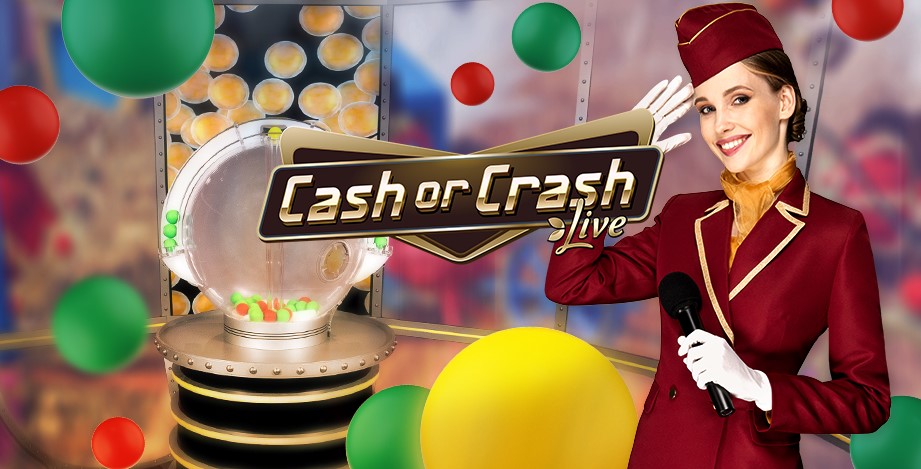
The concept of in-flight amusement has seen a substantial shift, evolving from communal aircraft screens to individual on demand platforms https://cashorcrash.uk. Today, a novel genre is emerging, merging interactive gaming entertainment with the possibility of tangible incentives, immediately available from a flier’s own device. Cash or Crash Live represents a notable example of this fresh wave, presenting a dynamic interactive show adventure designed for interaction during air travel. This evaluative analysis looks at the mechanics, draw, and operational aspects of this entertainment style in the defined context of UK airspace and for the UK travelling public. This offering strives to deliver a distinctive distraction, combining the suspense of a real-time game with the ease of in-flight connection, producing a unique offering for air companies seeking to upgrade their online passenger journey.
Investigating the Commuter Involvement Model
The engagement model of Cash or Crash Live is cleverly constructed to tap into several emotional triggers. The live, real-time nature produces urgency and a fear of missing out (FOMO), urging passengers to join a session as it commences. The simple ‘cash out’ action delivers a direct illusion of control, a potent psychological lever in an environment where passengers have little control over their trip. The rising multiplier feeds on anticipation and risk-reward evaluation, a cognitive process that can be highly absorbing. Furthermore, the possibility for recognition, such as a leaderboard showing the top cashed-out multipliers from a flight, adds a social competitive element. For the UK traveller, who may be journeying for business or leisure, this model presents a quick, engaging mental respite that is more interactive than reading or watching a film, possibly increasing overall satisfaction with the flight experience by providing a unforgettable and fresh activity.
Audience Attraction and Perception of Time Passing
The allure of such games probably differs across passenger demographics. Younger, digitally-native travellers may be immediately pulled to the interactive, game-show format, while others may consider it with curiosity. Its success lies in its simplicity; the core decision is easy to grasp regardless of gaming skill. A significant reported benefit is the modification of time-passage awareness. Engaging in a series of short, tense rounds can make time feel as though it is moving more quickly, a valuable effect on held-up flights or during the cruise phase of a journey. This psychological escape can be especially effective on the tightly packed short-haul routes typical in UK and European air travel, where cabin space is limited and traditional entertainment options may feel constrained. It gives a dedicated activity that requires minimal physical space but considerable mental attention.
Comprehending the Cash or Crash Live Game Mechanics
Cash or Crash Live works on a straightforward yet tense premise, styled after a live game show. Participants join a live session, usually using in-flight Wi-Fi to attach their device to the game server. The core mechanic involves a virtual multiplier that grows incrementally as a visual representation, such as a rocket or balloon, advances on screen. The central decision for the player is when to ‘cash out’ and lock in the accumulated multiplier, which corresponds to a potential reward. The inherent risk is that the game can ‘crash’ at any random moment, resetting the multiplier to zero for any players who have not cashed out. This generates a classic tension between greed and caution. The live element is crucial, as all participants in that session experience the same multiplier curve and crash point, fostering a sense of communal anticipation and competition, albeit remotely, with other passengers on the same flight or network.
The Role of Random Number Generators and Fairness
The integrity of a game like Cash or Crash Live is fundamentally dependent on its Random Number Generator (RNG). The moment of the ‘crash’ is decided by this algorithm, which must be provably fair and transparent to uphold user trust. Providers often employ cryptographic techniques to enable for the verification of each round’s outcome, assuring the crash point was not manipulated after the fact. For the UK audience, which is habituated to stringent regulations around gambling and gaming via the UK Gambling Commission, the distinction between a game of skill and a game of chance is paramount. Cash or Crash Live, in its standard form accessible in-flight, normally operates as a free-to-play game with non-monetary rewards or promotional credits, deliberately differentiating itself from real-money gambling models. This positioning is crucial for its adoption by airlines and its accessibility to a broad passenger demographic without age or regulatory restrictions.
Possible Anticipated Developments and Carrier Partnerships
The path for dynamic in-flight entertainment like Cash or Crash Live points towards more profound integration and customisation. Future developments may see the game linked directly to airline loyalty systems, with multipliers translating to air miles or lounge access passes. Themed versions linked to destinations or airline brands might enhance the marketing synergy. Technologically, integration with the aircraft’s inflight system could allow for subtle notifications or effortless login via the passenger’s booking reference. As connectivity technologies like Low Earth Orbit (LEO) satellite internet become more prevalent in aviation, enabling greater bandwidth and decreased latency, the potential for even more complex live multiplayer experiences rises. For UK airlines, strategic partnerships with established entertainment providers may become a component of their digital roadmap, designed at attracting specific passenger segments and increasing ancillary revenue opportunities through sponsored rewards or premium game features.
Key Assessment of Sustained Viability
The long-term viability of a singular application like Cash or Crash Live relies on its ability to adapt and preserve novelty. The primary game mechanic, while captivating, risks becoming monotonous without variations, new risk scenarios, or developing reward structures. Its success is also dependent on the broader adoption of reliable, and ideally, free, in-flight Wi-Fi across UK fleets; a paid connectivity barrier significantly restricts the addressable audience. Furthermore, it must continually validate its place in a passenger’s personal device ecosystem, contending not only with other in-flight options but with pre-downloaded content and offline apps. For lasting relevance, it may need to develop into a platform offering a range of different live interactive experiences, possibly including trivia, prediction markets on flight details, or other socially-connected games. Its endurance will depend on proving clear value to both airlines—through enhanced passenger satisfaction metrics and engagement data—and to passengers, through consistent, enjoyable, and fulfilling user experiences.
Regulatory and Functional Considerations in UK Airspace
Managing any form of dynamic service within the aviation environment requires careful handling of official and operational structures. In the UK, the primary aspect is the clear separation from real-money gambling, which is heavily governed. Cash or Crash Live, when presented as a free promotional game with prize draws, vouchers, or air miles as rewards, functions outside gambling legislation. Airlines must verify their deployment complies with advertising standards and does not deceive passengers about the nature of the rewards. Operationally, the service must be designed for offline resilience or minimal data usage to account for connectivity black spots, frequent during certain flight phases. Furthermore, user interface design must consider the cabin environment: screen brightness that is adjustable for night flights, intuitive controls, and clear status indicators. These aspects are essential for a service that seeks to be a integrated part of the in-flight experience rather than a burdensome addition.

The Progress of In-Flight Entertainment Systems
The journey of in-flight entertainment is a reflection of technological advancement and changing passenger expectations. For decades, the experience was primarily passive, marked by a single film projected onto a bulkhead screen, with audio provided via unwieldy headsets. The introduction of seatback screens represented a revolution, giving passengers a degree of control and choice, with libraries of films, television series, and music. This hardware-dependent model, however, involved significant weight and maintenance costs for airlines. The current paradigm shift moves towards ‘bring your own device’ (BYOD) systems, leveraging the passenger’s own smartphone or tablet as the primary entertainment portal. This shift reduces aircraft weight, simplifies airline logistics, and facilitates more customized and updateable content. It is within this BYOD ecosystem that interactive applications like Cash or Crash Live establish their niche, delivering a dynamic, participatory form of entertainment that static video libraries cannot provide, matching modern expectations for interactive digital engagement.
Moving from Passive Viewing to Active Participation
The shift from passive viewing to active participation is a critical evolution. Traditional entertainment options are intended for consumption, a way to pass time. Interactive applications, conversely, demand engagement, decision-making, and emotional investment from the user. This active model can alter the perception of time during a flight, particularly on shorter UK domestic or European routes where a full-length film may not be viable. The psychology of participation implies that a passenger involved in a game or interactive experience is more likely to be absorbed, perhaps reducing the subjective experience of flight duration. For airlines, this represents an opportunity to increase perceived value and passenger satisfaction without significant additional hardware investment. The success of such models, however, depends on intuitive design, reliable connectivity, and content that is captivating enough to motivate participation over more relaxed, traditional options.
Side-by-side Analysis with Conventional In-Flight Options
When positioned alongside traditional in-flight activities, Cash or Crash Live holds a particular niche. It is not a immediate competitor to film or television series collections, which meet a separate need for narrative immersion and relaxation. Instead, it enhances them by providing an substitute for passengers desiring stimulation and interaction. Contrasted to pre-loaded puzzle or arcade games often available on seatback systems, the live, communal, and high-stakes (albeit virtual stakes) nature of Cash or Crash Live provides a distinct adrenaline response. Its value proposition for airlines is diverse: it can serve as a low-cost content addition that updates frequently, yields operational data on passenger engagement, and serves as a likely differentiator in a competitive market. For the passenger, it widens the menu of on-hand activities, providing a choice that can be tailored to mood and flight duration.
Linking with UK In-Flight Connectivity Services
The viability of live interactive entertainment like Cash or Crash Live is directly connected to the presence and reliability of airborne Wi-Fi. Throughout UK airlines, the rollout of connectivity services has been steady, with many carriers on short-distance and long-distance fleets now providing some form of internet access, often branded as ‘Wi-Fi above the clouds’. The pricing plans differ, including no-cost messaging to premium levels for unrestricted web access. For a seamless Cash or Crash Live experience, a stable, low-latency network is recommended, though the game’s data requirements are generally low compared to video streaming. The setup procedure for the airline requires collaborating with the content supplier and guaranteeing the game’s data traffic is either whitelisted or works well under the bandwidth limitations of satellite or air-to-ground networks. This system integration is key to ensuring a smooth user experience that enriches, without causing frustration, the passenger journey.
Final Word: A Fresh Sector in Aerial Recreation
Cash or Crash Live constitutes a contemporary breakthrough in the airborne entertainment arena, specifically customised for the connected, engaging demands of modern passengers. Merging the suspense of a game show with the accessibility of personal device technology, it creates a distinctive niche that complements rather than replaces traditional amusements. For UK flyers, it offers a compelling distraction that can change time awareness and bring a level of thrill to the journey, provided it is backed by robust onboard internet. Its working model, carefully removed from real-money gambling, allows for extensive accessibility. While its long-term prospects will hinge on continuous innovation and strong airline integration, it presently stands as a significant example of how the passenger experience in UK airspace is evolving, shifting from a purely utility travel to an occasion for selected digital participation and corporate activity at 30,000 feet.