
Un participant régulier du Red Casino partage ses impressions depuis le Canada
Mayıs 18, 2026Unibet Casinon nettikasino-ohjelmistokehittäjät ja pelien tarjoajat Suomessa
Mayıs 18, 2026
Anyone who’s played darts in a pub and then tried their hand at Lucky Jet online could feel a strange sense of déjà vu. The core sensation is the same: that breathtaking moment watching a projectile’s path, wishing it to land in your favour. This piece looks at that crossover, dissecting how the strategic gap we call “darts between throws” works on the same frequency as the cash-out decisions in Lucky Jet. It’s where an old pub staple collides with a new digital hit.
The Timeless Appeal of the British Pub Game
You simply can’t separate darts from the pub. The game is embedded into the fabric of social life there. It’s a test of skill and nerve, taking place against a backdrop of chatter and clinking glasses. The routine is familiar: walk to the oche, throw, retrieve your darts, and do the maths. That rhythm turns into a kind of conversation. It builds camaraderie and a bit of healthy competition. For decades, it’s delivered a simple but deep kind of fun, a challenge to keep your hand steady while your mates watch.
Darts endures because it gets the balance right. It demands real, measurable skill—you can’t fake a double-top finish. Yet, anyone can pick up a dart and have a go. The board itself is a map of risk and reward, each segment clearly marked with its value. Tension mounts leg by leg, often coming down to that final, closing double. This creates neat, self-contained rounds of play. It’s a structure you see echoed in the discrete bets and rounds of many online games that borrow from this pub spirit.
Understanding the Lucky Jet Game Mechanics
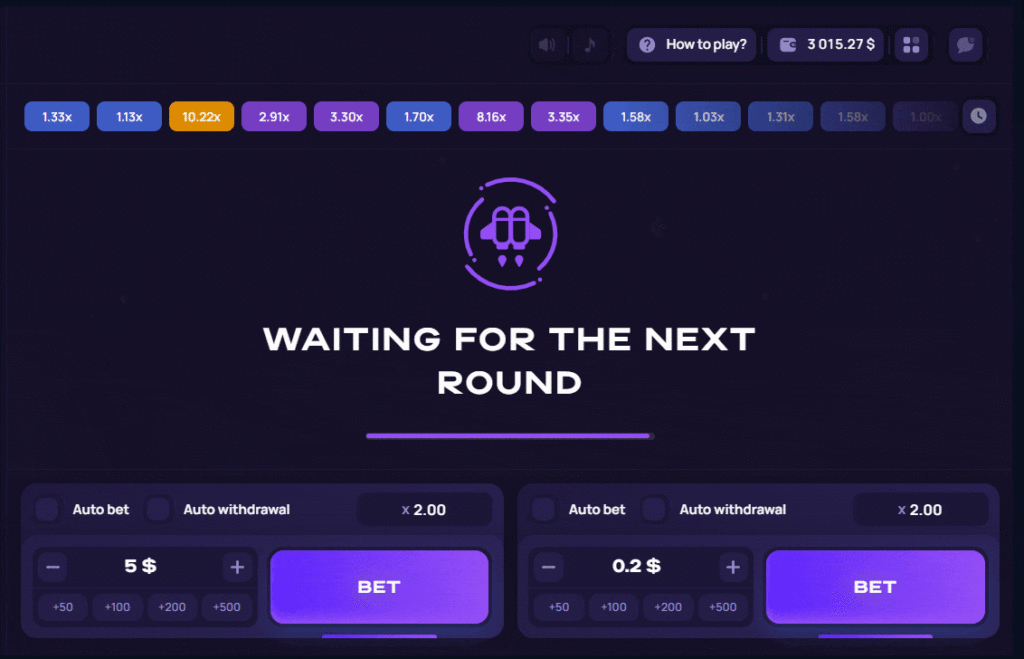
Lucky Jet runs on a simple, visual hook. A cartoon character with a jetpack takes off, and a multiplier climbs as it goes further away. Your job is to withdraw your bet before the character disappears into thin air. The higher it climbs, the greater your potential win, but the bigger the chance you end up with nothing. Every second of that climb cranks up the tension, mirroring the arc of a dart in mid-air.
The loop is compelling in its simplicity: bet, watch, and decide. You have no control over the jet itself. Your only option is the cash-out button. The skill isn’t physical; it’s in your timing and your tolerance for risk. That internal battle between greed and caution is something everyone recognizes. It transforms a chance-based game into a test of nerve, posing the same question as a crucial dart throw: go for the glory, or bank what you’ve got?
Šipky Mezi hody: Psychologie of pauzy
V šipkách, hra není jen v samotném hodu. It’s in the quiet moment after. V tu chvíli hráč počítá, upravuje strategii, a popadne dech. They look at the scoreboard, zvolí si terč—maybe the fat bit of the 20, třeba úzký double—a představí si hod. Tato pauza je kapsa soustředění uprostřed hlučné hospody. It’s where the psychological battle happens.
This is where composure is built or broken. It’s a fight against distraction, the pressure of the moment, a vlastními narůstajícími pochybami. Kvalitní hráči tento prostor zvládají. Používají ho k obnovení koncentrace a zaměření na další krok. This “strategic pause” is the direct cousin to the moment in Lucky Jet. Je to stejný mentální prostor, který obýváte, jak pozorujete násobič letící vzhůru, s prstem nad tlačítkem, zda vybrat nebo jet dál.
Pacing Parallels: From Oche to Online Interface
The rhythm of a darts match and a Lucky Jet session are closely related. Both work in quick, distinct rounds. Darts features throws and legs. Lucky Jet has back-to-back rounds that end in an instant. This rhythm is simple to get into and difficult to leave. Every round gives the impression of a fresh start, a new chance. That’s a powerful engine for keeping someone playing.
They also both enable spectating. In the pub, you study your opponent’s throws, assessing their form and their fortune. Online, you often view a feed of other players cashing out, their wins and losses appearing. This collective watching, this joint observation of luck, forges a kind of community around the event. Whether physically or virtually, you’re not playing in a vacuum. You’re part of a group cycle of waiting and seeing what happens.
Skill vs. Chance in Bar and Online Play
Darts is a game of skill, full stop. Physical memory, a reliable stance, a clean throw—these are refined through repetition. A fortunate bounce might happen once, but over time, the stronger player prevails. Lucky Jet is different. It’s a gambling game with a judgment layered on top. You cannot steer the jet, but you choose when to exit. That selection needs discernment and a calm head.
Understanding this difference right matters. Viewing Lucky Jet as a pure skill game will lead you astray, the same as chalking up bad luck for every dart that doesn’t strike the treble neglects poor technique. Lucky Jet’s dual nature—random flight, calculated cash-out—is what gives it appeal. It evokes the *feeling* of matching your instincts against fate. It seems like having to “hit the double under pressure,” even though the inner workings underneath are completely different.
The Social Dynamic: Bonding Over Games
Traditional pub games depend on their social setting. The conversation, the shared drinks, the groans and cheers are part of the experience. Darts is frequently a team affair, the basis of local leagues and enduring friendships. This community is a major factor the game has lasted. Digital platforms have tried to copy this by integrating chat boxes, leaderboards, and live feeds of other players playing.
When playing Lucky Jet, you frequently notice you’re in a digital room with others. It’s not the same as a physical pub, but it creates a modern version of spending time together. As someone hits a huge multiplier and everyone sees it pop up, it generates a wave of digital applause. It draws on the same human craving for collective thrill and a good story that you find around a dartboard.
Modern Interpretations of Classic Game Concepts
Lucky Jet is a smooth, modern version on ideas that are as old as gambling itself. The “cash-out” button is just a digital equivalent of knowing when to walk away. The rising multiplier is a changing, visual gauge of escalating odds, more immediate than any static dartboard. It takes the psychological essence of traditional betting—the anxiety of not knowing the outcome—and wraps it in bright, game-like graphics.
This kind of transformation is normal. Games always adapt to their medium. Darts itself started with people throwing shortened arrows at the bottom of wine casks. Online games take those classic human impulses and channel them into new interfaces. They strip away physical barriers for instant play, but keep the essential emotional journey. Lucky Jet doesn’t kill the pub experience. It just provides a new, accessible route to the same old thrill of waiting for a result.
Mindful Gambling in Any Setting
It makes no difference if you’re at a cozy bar or relaxing at home on your device; betting responsibly is key. The fast, round-based nature of darts as well as Lucky Jet can cause sessions to extend. In darts, the social atmosphere and the act of walking to the board provide built-in breaks. Online, you must create those pauses on your own. Deciding on a budget and time frame before you press “play” is like deciding how much you’ll spend on drinks for the night.
A wise approach is to view gaming as paid fun, not a secondary income. The amount you’re ready to invest is the cost of admission for the thrill. When that budget is exhausted, the game stops, irrespective of your current standing. This mindset is critical for virtual play, but it’s similarly sensible in a pub. Enjoy the game for the thrill, the trial of your courage, and the social enjoyment. Avoid playing solely for profit.
Cultural Fusion: Why the Analogy Connects
Comparing darts to Lucky Jet succeeds because it connects something new to something deeply recognizable. It roots an innovative digital game in traditional territory. For a lot of people, the idea of “darts between throws” perfectly describes that tense cash-out window in Lucky Jet. The blend helps new players absorb the game’s rhythm and psychological stakes using a framework they already understand.
In the end, both games satisfy the same human desire. They deliver bursts of focused tension and release inside a organized, entertaining style. They build a narrative—the tale of a comeback in a darts match, or the legend of a perfectly timed 50x cash-out. That storytelling piece, the moment you recall and retell later, is the essence of the attraction. It’s why we play, on any arena, in any age.
Frequently Asked Questions
Is Lucky Jet a game of skill like darts?
Not really. Darts depends on physical skill you build over time. Lucky Jet is a game of chance; the jet’s flight is random. The skill element is in your cash-out timing. That requires managing risk and keeping your emotions in check, which is similar to the mental side of darts. But you can’t use a practiced throwing motion to influence where the jet goes.
What does “darts between throws” mean in this context?
It’s a means of describing the crucial pause for decision-making. In darts, it’s the moment a player works out the scores and selects their target. In Lucky Jet, it’s the tense gap where the multiplier is climbing and you must decide instantly to cash out or wait. Both are psychological phases where the real game happens in your head, demanding focus and calm under pressure.
Am I able to play Lucky Jet in a social environment like a pub game?
It’s played online, but Lucky Jet typically has social features like live chat and visible bets, making a shared digital space https://flytakeair.com/lucky-jet/. It replicates the communal buzz of a pub, but on a screen. To obtain the real pub feel, friends can crowd around one device, arguing over when to cash out and exchanging the reactions, mixing the digital game with a physical get-together.
How do I manage my play responsibly with fast-paced games like this?
Set a firm budget and a time limit before you begin. View it as buying entertainment. Use the responsible gaming tools on the platform, like deposit limits and timeout settings. Take regular breaks. Never try to win back what you’ve lost. Remember, the fun is in the gameplay and the decisions, not the money. If you stop having fun, log off right away.